
Book reviews exploring the intersections of race, class, sexuality, etc.
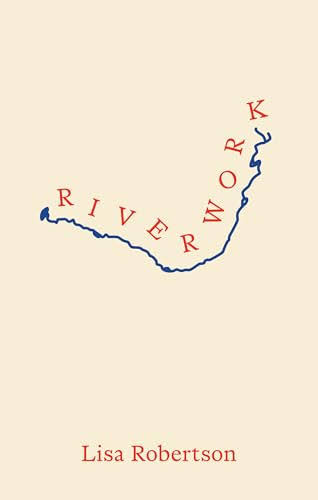
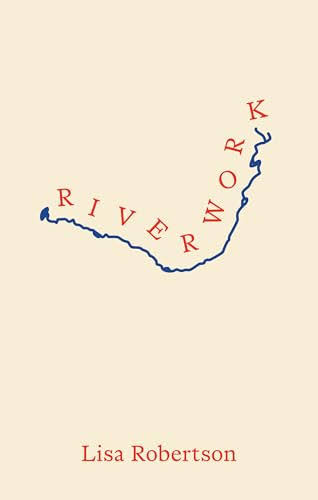
History is about preservation and memory, but it also about erasure. Or, to quote the back cover of Lisa Robertson’s newest work, Riverwork, “Some ruins are invisible.” It traces the life of Lucy Frost, who works cleaning the apartments of Paris’s academic class. But this is a novel about what is on the surface and what’s buried beneath. Lucy very much embodies that which is marginalized and swept beneath the carpet: middle-aged, lesbian, working-class. This multifaceted intersectionality plays against the themes, obsessions, and quirks animating the novel and her life. By day, she works as a housekeeper, being a kind of involuntary companion to an elderly academic she calls The Archivist. By night, she works on her own personal research project, filling notebooks with information about Parisian laundresses who worked by the River Biévre, now long since paved over. She seeks to complete this project, one began by her great-aunt, a teacher who had mysteriously disappeared.
In the interim, the novel becomes an inventory of extended meditations on various and sundry topics. These include the act of walking, on translating Chateaubriand’s Memoirs, and Marcel Proust’s furnishings in his private room in a male bordello. Lucy’s nighttime logomania, her notebook-filling, acts as a kind of reflection of Walter Benjamin’s own unfinished magnum opus, The Arcade Project, itself an encyclopedic exploration of Paris’s nascent emergence into a global capitalist power. Riverwork is a continuation of Robertson’s obsession with Paris, this time taking a more expansive view of lives and personalities, a pendant to her previous novel, The Baudelaire Fractal.
As Lucy says about her childhood, “I believed in the nineteenth century, not yet having discovered my own.” Riverwork is about Lucy’s belatedness, her arriving late to things. She follows the ghost of her great-aunt in her own intellectual endeavors and sees the ghosts of the laundresses in the paved-over River Biévre. This is a novel as intellectual exploration, as free-associative meditation, as queer critique of the Dead White Male master narratives hellbent on erasure and marginalization. Yet for all Riverwork unearths about those silenced in the past, it is a novel filled with joy and humor. This is because discovery and history can be and should be fun. These newly liberated voices and these cohorts of domesticity relegated to history’s dustbin march forth in a novel that is a celebratory piece of verbal bacchanalia.


