
Small-sized reviews, raves, and recommendations.

Dr. Kathryn Railly: Cassandra in Greek legend, you recall, was condemned to know the future but to be disbelieved when she foretold it. Hence the agony of foreknowledge combined with the impotence to do anything about it.
— 12 Monkeys (Terry Gilliam, 1995)
“I no longer believe that freedom and democracy are compatible…”
— Pete Thiel
“You need to understand that Sam [Altman] can never be trusted. He is a sociopath. He would do anything.”
— Aaron Swartz
“They want to deliver vast amounts of information over the Internet. And again, the Internet is not something you just dump something on. It’s not a big truck. It’s a series of tubes.”
— Senator Ted Stevens
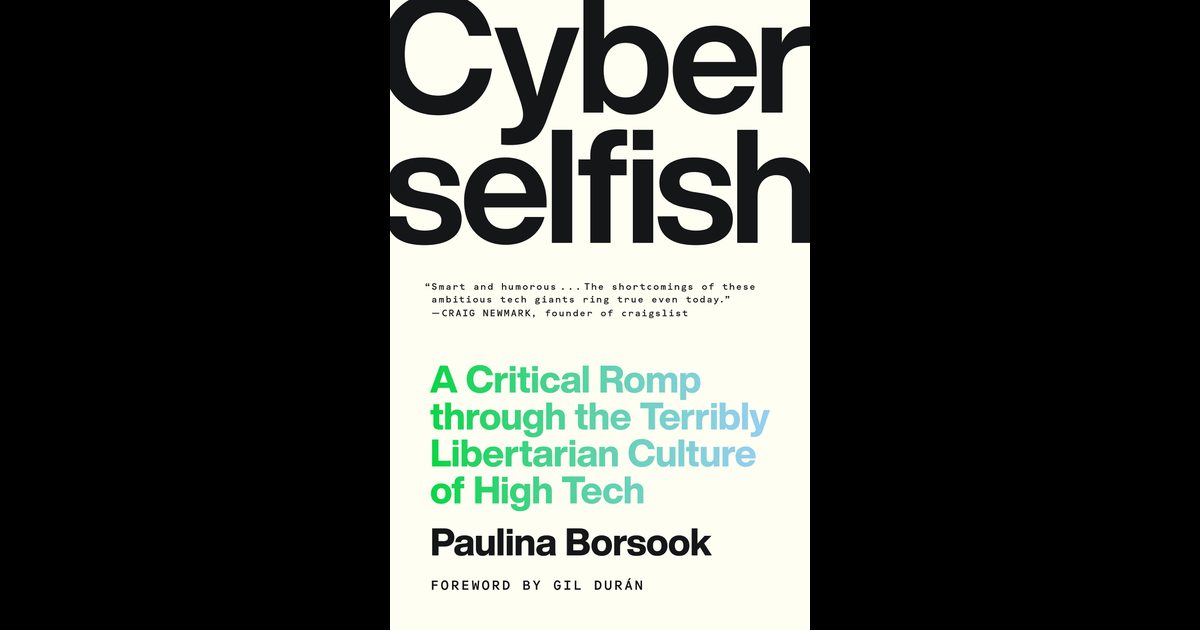
In the heyday of the dot-com boom, those days of the dial-up skronk, and the Pets.com dog puppet, a small book came out poking holes in the fragile egos of Silicon Valley techbros. The book was called Cyberselfish: A Critical Romp through the Terribly Libertarian Culture of High Tech, by Paulina Borsook. Borsook, a former tech writer for Wired, offers a tongue-in-cheek tour through the world of high tech during the infancy of the Internet and high-tech nerdery back when it was a fringe subculture.
As an autobiographical aside, I remember these heady days. The book was released in May 2000, but chronicles the culture during the late Nineties. Those days of dial-up and an Internet more text-based than anything. A different world from the one we inhabit now. I remember the Internet being the New Thing when I attended college in the mid-90s. Playing Duke Nukem in the dorms on LAN and figuring out how to use an Amazon gift card I received from a dorm mate. Also, not coincidentally, my college roommate and several friends were Comp Sci majors. As I was still pretty young and my political preferences could still be classified as “formative,” I didn’t really ask or pry into the political and ideological leanings of these Comp Sci majors.
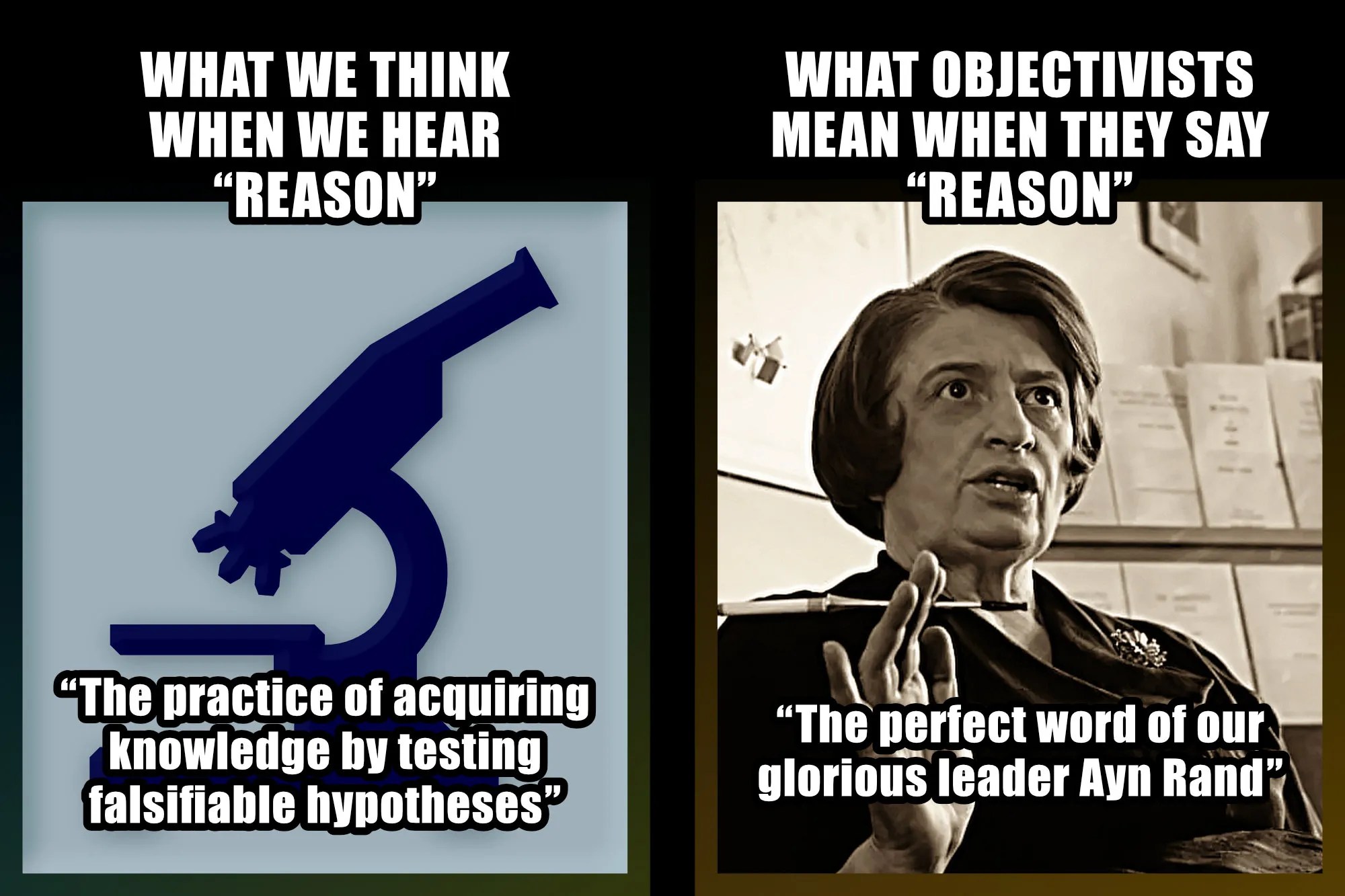
I did read The Fountainhead by Ayn Rand in high school and was captivated by the protagonist’s uncompromising individualism. Fast forward to 2009 and I read decided to read Atlas Shrugged during the Great Recession. Ayn Rand is a third-rate literary hack and pseudo-philosopher, a muse to anarcho-capitalist sociopaths and cultural philistines. Rand is a philosopher the same way Peeps are nutritious. Despite my religious upbringing, my political philosophy was nurtured in the pages of MAD Magazine, vintage Saturday Night Live reruns, and The Daily Show’s first Jon Stewart era. Which is a rather elaborate way of saying I have a fine-tuned Bullshit Meter and can smell it regardless of one’s ideological or partisan persuasion. MAGA’s sanctimonious thuggery raises my hackles, but so does a spineless centrist whose transactional ethics veils a worthless gray Nothing in their hollow soul. I’d hold both in contempt, but why waste the energy?
Back to Cyberselfish and technolibertarian cypherpunks. The book remains as relevant as ever and it won’t make a difference belaboring the fact with empty platitudes like “We should have listened,” etc., turning Borsook into a latter-day Cassandra. Sure, that’s true, but a more relevant question is: “So what are you going to DO about it?”
While Cyberselfish reads as a dated document, it is also a rollicking chronicle of those halcyon days when the Internet was new and unknown. Borsook casts her net wide and captures the culture in a series of vignettes. She attends conferences on Bionomics, traces the origins of Wired magazine, and looks into why technolibertarians are such ungenerous dicks. Despite the deserved critique into technolibertarianism, she investigates its various and sundry sub-groups. Libertarianism, both in the tech world and in the United States in general, should not be treated as an undifferentiated monolith. It is a multifaceted thing, having both philosophical and political wings. It is both a continuation and a reaction to the go-go free-wheeling attitudes and beliefs of the Sixties. It ranges from Cato Institute anti-regulation capitalist cheerleaders to ex-hippies who want to smoke and have sex with who they choose without The Man harshing their mellow. It also gets into violent territory with anti-government militia types and Timothy McVeigh domestic terrorists who want to reduce the size of the Federal Government one building at a time. Technolibertarianism represents an overlapping Venn Diagram of all these variations.
Wired’s origins, before it was bought out by Condé Nast, involved an editorial partnership between a pro-business Republican and a former Deadhead. Strange bedfellows, indeed. Not without its faults, Borsook chronicles this odd alliance, but also the misogynist sausage party atmosphere, along with the editorial tyranny spiking anything contrary to the One True Faith: Technolibertarianism. Despite the ideology’s worshipful stance on The Free Market and its economic perfection – we had just won the Cold War after all, so, yeah, hooray capitalism – its editorial board crushed anything critical of libertarianism with the speed and efficiency of the NKVD.
Cyberselfish didn’t sell well when it first came out. Despite its prescience and positive critical reception, the dot-com bubble bursting shortly followed by 9/11 buried it in oblivion. People had other things on their mind. But today, with the Republican Party as basically a front for a domestic terrorist organization, AI infesting everything, and technofascist neckbeards cursing the culture with their obscenely bland turtleneck “aesthetic,” Cyberselfish becomes a necessary read. As the hoary catchphrase says, “Now more than ever.” While the ultra-conservative kakistocracy and its bloodsucking cabal of idiotic abominations make the book required reading, one shouldn’t be put off by pushy book reviewers saying, “Read this!” That’s the territory of libertarian drones shoving Atlas Shrugged in your face and acting like evangelical door-to-door salesmen. Despite its newfound relevance, Cyberselfish is entertaining and funny. One can laugh at its dated references and creaky tech-lingo. One can also cringe at its scathing indictment of 90s techbros, these overly wealthy, thin-skinned, ungenerous weaklings. I’ll end this review with a quote from Oliver Stone’s Wall Street, itself a dark portrait of short-sighted greedheads, “What you see is a guy who never measured a man’s success by the size of his wallet!”


Re: “Ayn Rand is a third-rate literary hack and pseudo-philosopher, a muse to anarcho-capitalist sociopaths”
Yeah, the fact that sociopaths or psychopaths rule is only ONE part of the equation. The pack of leading sociopaths/psychopaths do not operate in a vacuum, and never have.
The psychopaths in power are in those positions and do what they do ONLY because of the mostly willful activities, or inactivities, of the majority of self-entitled “decent” or “civil” or “good” or “awake” or “spiritual” or “religious” people — the 90-95% of the herd — and because they do NOT really want the truth but comforting fantasies (study the free essay “The 2 Married Pink Elephants In The Historical Room”… https://www.rolf-hefti.com/covid-19-coronavirus.html).
“Our current ‘state’ is the dictatorship of evil. We know that already, I hear you object, and we don’t need you to reproach us for it yet again. But, I ask you, if you know that, then why don’t you act? Why do you tolerate these rulers gradually robbing you, in public and in private, of one right after another, until one day nothing, absolutely nothing, remains but the machinery of the state, under the command of criminals and drunkards?” — from a White Rose Pamphlet, the ‘White Rose’ was a German resistance group fighting Hitler’s Nazi regime
“The problem we face is that few people really care beyond being fed and entertained.” — Paul Craig Roberts, Ph.D., American economist & former US regime official, in 2026 [https://paulcraigroberts.org/the-lies-used-to-deceive-us]
Isn’t it about time for anyone to wake up to the ULTIMATE DEPTH of the human rabbit hole?
Of course it is but…
“I’ve come to realize that the biggest problem anywhere in the world is that people’s perceptions of reality are compulsively filtered through the screening mesh of WHAT THEY WANT, AND DO NOT WANT, TO BE TRUE.” — Travis Walton, Author
Without a proper understanding, and full acknowledgment, of the true WHOLE problem and reality, no real constructive LASTING change is possible for humanity.
And if anyone does NOT acknowledge, recognize, and face (either wittingly or unwittingly) the WHOLE truth THEY are helping to prevent this from happening. And so they are “part of the problem” and not part of the solution.
“If we have learned anything in the past six years, it is that vaccinologists, doctors, and the government in general do not have good intentions and never did. The clear intention of everyone concerned was and is to make as much dirty money as possible, letting any amount of collateral damage slide, including a genocide and mass poisoning [with Covid-19 jabs]. The fact [is] that Big Pharma just murdered millions of people, with the full support of government, media, and “science”. With Covid, everyone is part of the fraud, many of them paid off, so no one has any reason to expose it, and big reasons to bury it. Don’t believe anything these people tell you, ABOUT ANYTHING. It isn’t time for a civil war against your neighbors, it is time for a revolution against these hoaxers and thieves.” — Miles Mathis, American author, in 2025
“Ignorance is the root cause of all Evil. Since only Knowledge eradicates ignorance, it is our duty and moral obligation to educate ourselves, as well as the masses around us.” — Anonymous
Speaking of ignorance is evil, how can the masses potentially get out of this whole mess (and create justice, freedom and peace for all)? First, EVERYONE needs to learn, and teach others, what TRUE morality is —99% of people don’t know what it is because (1) it’s NOT taught in the official indoctrination system, better know as the “education system,” and (2) it’s NOT the same as religious morality: https://odysee.com/@woeih:e/Mark-Passio-Government-Is-Slavery:ahttps://odysee.com/@woeih:e/Mark-Passio-Interviewed-By-Shaun-Atwood-2026-06-18:6
Because if you don’t know what TRUE morality is you will not stop doing, unwittingly or wittingly, evil things…
“The solution is NOT to create something new (eg, new systems of organization, new technologies, etc). The solution is to STOP being complicit with evil. To STOP doing things that are not moral for a reward. To STOP being complicit with anything the control system tells us we must do.” — Mark Passio, Spiritual Teacher, in 2023
LikeLike