Posts about poetry, poiesis, and poetics.
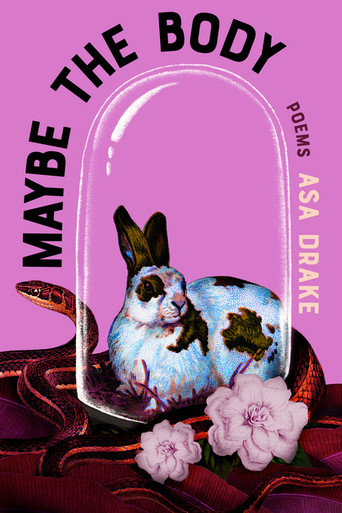
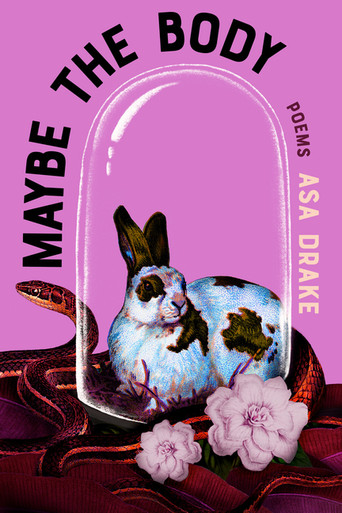
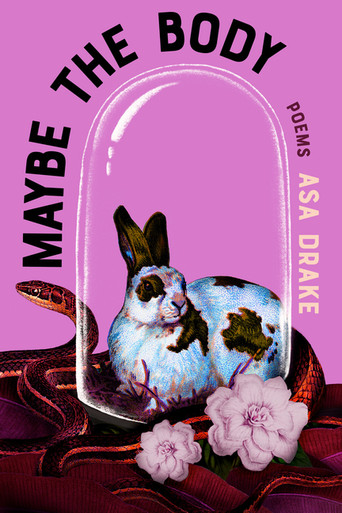
“To someone who’s heard I love you too many times,” is the title to multiple poems in Asa Drake’s poetry collection, Maybe the Body. The award-winning poet currently works as a teaching artist and in terms self-identifies as “a Filipina/white poet in Central Florida.” Maybe the Body seeks the explore and challenge the preconceptions associated with these multilayered identities.
“It is so easy to know how another will root out my provenance. Less to understand what I want from this conversation I don’t want,” Drake says in “Disagreeable Aspects of Hyphenation.” The poem originates around her dealing with a co-worker who thinks her food isn’t anything special, yet packs a to-go bag anyway. In “Tonight, a Woman,” there are the lines:
“I have heard someone I love speak around someone I love, like English is a sieve for catching one another’s cruelty.” Later the line: “The earth is an emotional wreck. And:
“[…] and I have no redemption arc.
Only a lovely speech pattern.”
Surviving in this dismal present, we see how impotent language has become. Drake having a “lovely speech pattern” but “no redemption arc” illustrates how even our instinctive desire to aestheticize things just seems like a hollow exercise. The following poem, “In the Tradition of Women Who’ve Blessed Me to Transfer Their Virtues” says
Like hunger in the years before,
I asked fullness to be endless.
Every noise, I give cause to.
An excuse to find comfort
in the sound of eating,
the small soul cutting a summer lawn.
Against a background of domestic quiddities, hunger and eating take on a more elemental and primordial form. “Permission is a fruit / I’ve cut from the tree, meaning // I’ve taken human sacrifice.” Foodways and folkways lead to discussions on race, gender, and authenticity. “Lessons from the Replicant” has Drake reacting to a man shouting at her and she taking a different route to the cemetery. “I / dont’t think the single / incident is interesting.” But this leads to ruminating on an actress she saw in the past:
The first time I saw my likeness
on television, the actress pretended
to be all-white. The second time, she wasn’t human at all.
It becomes all too easy to resurrect Orientalist tropes or equally easy science fiction tropes that use “the Asian” as shorthand for the exotic and techno-futuristic. Did Drake watch Blade Runner? One remembers the yellowface controversy surrounding the cast of Cloud Atlas. How does one live with the ongoing tendency of the entertainment industry using one’s culture simply as genre fodder?
Maybe the Body is about these tough negotiations. It is about preserving family traditions but also dealing with the latent and explicit racism seemingly hard-baked into a nation that flaunts its egalitarianism and cult of economic self-improvement. With the upcoming 250th anniversary steadily approaching, it becomes a challenge to question the foundational myths many take as literal truth yet still genuinely appreciate the opportunities and freedoms available to (hopefully) all. But how does one do that amid an avalanche of red, white, and blue patriotic kitsch and a nation’s lazy slide into a theocratic authoritarianism? How did the Philippines, once liberated from the shackles of Japanese occupation, willfully accept the lengthy tyranny of Ferdinand Marcos? What do the words like freedom, equality, and opportunity really mean? Or are they merely the English language “sieve” used to catch one another’s cruelty?