Book reviews exploring the intersections of race, class, sexuality, etc.
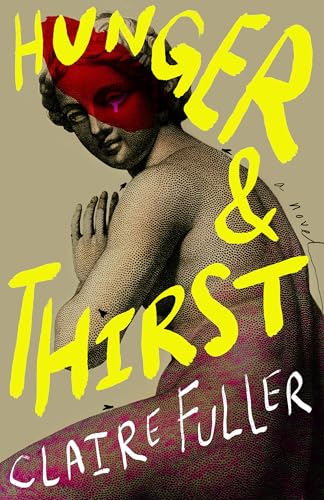
In Thatcher-era Britain, Ursula works delivering mail at the local art school. After years in and out of the foster home system, she jumps at the opportunity to live with her wild friend Sue in the Underwood. But in this case, they will be squatting, since the previous owner met with a bad end. Hunger and Thirst, by Claire Fuller, jumps between Ursula’s past and the present, where she lives as a reclusive sculptor. In the present, living under a pseudonym, she has to contend with a true crime documentarian searching for the truth.
After moving in to the Underwood, Ursula and Sue enjoy a somewhat stable existence, albeit in the legal and socioeconomic gray zone as squatters. When Sue invites Vince, another co-worker, over to live with them, things get heated. Vince is rude and intimidating, although not without cause, since we learn his attitude is colored by a personal history he wants to keep secret. As time goes by, Ursula is semi-adopted into Sue’s family, to the point of becoming an unofficial family member. While Ursula craves attention and love, Sue is a daredevil. She keeps pushing Ursula to do things in a rapidly escalating game of truth or dare. In one of these cases, Ursula steals a sculptor’s mallet from the art school. Sue also has artistic ambitions, drawing Vince and Ursula into her amateur film. The work focuses on the alleged grisly murders that happened at the Underwood.
A tragic turn of events ends in Sue’s death and Ursula covers it up, literally burying Sue in the backyard. She attempts to keep it a secret until the guilt becomes overwhelming. Those around her think Sue is missing, having absconded off to America to fulfill her dreams of becoming a filmmaker. Ursula wants to correct that misconception, but is constantly rebuffed. Like the local drunk in a monster movie who sees the creature, no one believes Ursula. Her being poor, a foster care child, and working in the lower-echelons of academia count against her. Added to these are her mental health issues. Since Ursula is the narrator, these socioeconomic and psychological factors turn her into an unreliable narrator.
Throughout the novel, we never know for sure. Did this really happen? Or did Ursula imagine this? Our inherent biases against the collective population labeled as working class / lower class / underclass do strange things to our thinking. In the present day, when Ursula is a successful artist, why is her perspective suddenly legitimate? The true crime documentarian threatens this financial success. If she is implicated for murdering her friend, she could lose everything. In Hunger and Thirst, gender, class, occupation, and neurological status all combine into a dangerous cocktail. Populist politicians exploit these factors and then collude with their corporate friends in further acts of kleptoparasitism upon the very same people who helped elect them. Claire Fuller’s novel uses the background of Thatcher’s Britain as a background for a Gothic tale told from the perspective of a member of its most vulnerable population.