
Small-sized reviews, raves, and recommendations.

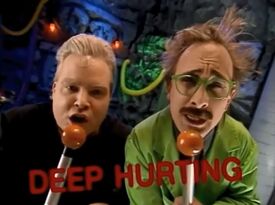
Dr. Forrester and TV’s Frank: DEEEEEEEP HUUUURRRRTING! DEEEEEEEP HUUUURRRRTING!!!

From Mystery Science Theater 3000, Episode 410 Hercules Against the Moon Men
Pain becomes a transformative agent in We Should All Be Birds: A Memoir, by Brian Buckbee with Carol Ann Fitzgerald. Early on we discover Brian suffers from Chronic Fatigue Syndrome (CFS), a debilitating condition that leaves him unable to read and write. Prior to the onset of this chronic illness Brian was a university instructor, adventurer, and endurance athlete. As his memoir makes agonizingly clear, CFS is a condition that, due to the severity of the pain it inflicts on the individual, leaves him unable to live life as he once did. Things one would take for granted like reading, writing, and enjoying sunlight, all become too painful to endure.
Despite its innocuous name CFS encompasses a lot more than simply “being tired.” One the narrative arcs in the memoir involves Brian legally attaining “disability status.” But this becomes a challenge since CFS is difficult to describe and has no known cure. The glib response to his pain, “So what if you’re tired, get a job!” can seem callous, but not illogical in its intent. As with many who suffer from this condition, there is a long road to the eventual correct diagnosis.
We Should All Be Birds is a memoir that begins in media res. Brian suffers from a kind of super-perma-migraine. (When one sees prescription ads on TV for migraine medication, this falls under the presumption that even a severe migraine eventually ends.) In the case with Brian and his CFS, the migraine is very severe and it never ends. As Brian states, “The headache was the most disastrous symptom of the mystery illness that had overtaken me, but its other symptoms could also be intense – muscle weakness, shaking, seizures, nausea, and extensive body pain that followed even the smallest amounts of exertion.” During one of his evening walks he discovers Two-Step, an injured pigeon. Thereafter begins a journey of rehabilitation, both for the bird and Brian. He bonds with the bird and it helps alleviate some of the pain he suffers. Eventually his home becomes a refuge for an entire menagerie of birds.
Brian’s condition also creates a uniquely complicated process for “writing” this memoir. Due to the pain involved with reading and writing, he dictates the memoir to his editor, Carol Ann Fitzgerald. (Since the sun will trigger his painful migraine, staring at the computer screen is out of the question.) The memoirist-editor relationship is not one-sided or one-directional. Throughout the book, we read about his conflicts with Carol Ann. From refusing to take her suggestions to trying to hide certain aspects of his life with her. (“She wouldn’t like this,” etc.), he retains a stubborn independence of spirit. But one shouldn’t misinterpret this friction as inherently antagonistic, because it comes across as an otherwise professional and productive exercise.
We Should All Be Birds is a fascinating experiment in the memoir genre. It is as much about birds as its human subject. Brian cherishes Two-Step the pigeon, a bird species most would consider a pest. It is also a thoughtful meditation on the nature and consequences of disability. Just because one can’t see Brian disability doesn’t mean it isn’t there. It’s invisibility only makes the symptoms like extreme pain all the more harrowing. It is about the pain of transformation, losing one’s former status and reluctantly embracing one’s new status. Finally, it is about the healing power of animals, as agents providing a mental and physical salve to an otherwise unendurable sitaution.

 The Driftless Area Review