

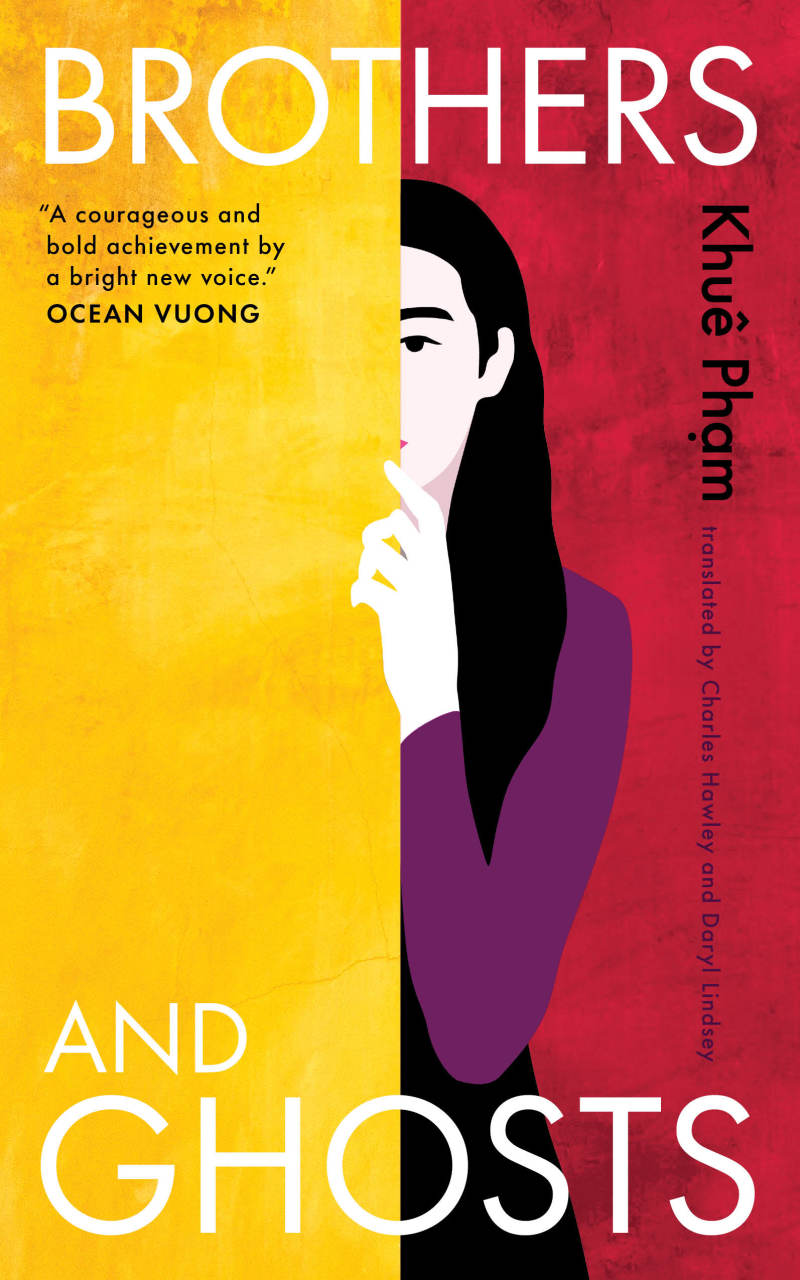
A series dedicated to literature in translation whether classic or contemporary.
Originally published in German as Wo auch immer ihr seid (btb / Penguin Random House, 2021)
Translated by Charles Hawley and Daryl Lindsey
Publisher: Scribe (2024)
Warning: Mild spoilers throughout.
In Germany “Kiéu calls herself Kim because it’s easier for Europeans to pronounce.” Brothers and Ghosts, by Khuê Phạm deals with the challenges and frustrations of immigration, war, and assimilation. Kim is the daughter of Vietnamese immigrants and faces the usual litany of issues facing many second generation immigrants. Her parents arrived in Germany because her father had chosen to study medicine. Tradition and parental expectations weight heavily on Kim. Her relationship with a young man gets thrown into chaos when she discovers she’s pregnant. Hiding this new status becomes a comedy of errors when her family is called to visit her father’s estranged brother living in California.
The narrative alternates between passages in the present and flashbacks to the lives of the brothers. The medical student living in Germany becomes educated on the atrocities committed by the Americans, eventually becoming a vocal opponent of the war. His brother, who stayed during the fall of South Vietnam, witnesses the carnage and suffering inflicted by the North Vietnamese. While the Cold War has been notoriously painted in black and white terms – the heroic US and allies vs. the godless commie villains and their puppet regimes – the historical records bears out something more labyrinthine and gray. Neither side deserves any awards for humanitarianism or ideological purity. The West treated Vietnam the same way a Hollywood celebrity treats a child they adopted from a Third World country: like nothing more than a hood ornament. South Vietnam was a nation run by a corrupt, nepotistic, sanctimonious, and incompetent regime. When Diem fell, he was replaced by a merry-go-round of military juntas. The North, by comparison, was more stable, albeit authoritarian, puritanical, and ideologically extreme. The United States and the Soviet Union both dumped money into the situation as the people suffered and endured. Yet another colonizer, this time waving a different flag and uttering different shibboleths about freedom and liberty and whatever.
Taking place around the 2016 election, Kim is shocked to learn her uncle is a vocal Trump supporter. While the Vietnamese community has been supportive of Republican candidates, Kim’s shock is set against her uncle’s back-story, surviving his North Vietnamese Communist “liberators” and his attempts to escape. During one of these attempts, he travels into Cambodia and witnesses the apocalyptic devastation of the Khmer Rouge. His political conservatism and capitalist true believer attitude didn’t develop in a vacuum. It is the result of survivor’s guilt and seeing first-hand the grotesque criminality of Communism. In this way Brothers and Ghosts bears a narrative resemblance to The Godfather Part II. Once we strip away the fawning hagiography for the film and examine its narrative framework, we see both book and film as multi-generational tales. Kim is ignorant of her uncle’s struggles and her uncle’s age brought wisdom but also deep-set presumptions. He thinks Kim is like any obedient Vietnamese daughter, ready to be slotted into marriage, motherhood, and homemaking. He doesn’t see “sacrifice” as a pair of hand-cuffs. Fate can be a security blanket and a comfort. Fate can also be suicide, a death of the self, a personal self-murder to some abstract notion of tradition, expectations, and so forth. Kim keeps mum about her pregnancy, lest the hydra of family expectations arise.
Brothers and Ghosts, by Khuê Phạm, is a gut-wrenching exploration about how war can tear families apart. Phạm represents a lesser-known immigrant cohort within Germany, at least to an American audience perhaps familiar with the Turkish Gastarbeiter (guest worker) community. Kim’s challenges and difficulties as a second-generation immigrant provide a fascinating exploration about who she is. Is she German? Is she Vietnamese? Is she a German of Vietnamese descent? While true in the legal sense, it is also reductive in an ethnic sense. To be described as such reduces her status to her as racial subject, implying the German norm to be white. (Europe has its own immigration issues, complicated by its own racist assumptions and coded protectiveness for an assumed default whiteness. “European = White” has been seen as a given for a very long time. But is it? And even if it is, why should it be?) The novel is a lengthy investigation into that most troubling of questions, “Who am I?” And who gets to determine that answer? You? Your family? Your country?

 The Driftless Area Review
love drifters review, always serious academic topical content!
LikeLike