

THE CUT-OUT AND THE ENIGMA OF AUTHENTICITY
One of the products of the September 11 terrorist attacks was the alleged era of “The New Authenticity.”* As the Twin Towers fell, so, apparently did irony and the cynical anomie of jaded Nineties Gen-Xers.
I call bullshit.
As Brossard wrote, “thus sparkles the artifice and exposes itself.” I would argue that there’s nothing more fake and artificial than “authenticity.” To be more specific, to posture towards “being authentic.” It is a weasel word rife with contradictions, along with that other manufactured product … Realism. Realism, like Authenticity, is a contrivance.
“I’m David! I’m special! I’m unique! I’m David! You can’t have her!” as David (Haley Joel Osment) bashes the head of another android David in A.I. Artificial Intelligence (Steven Spielberg, 2001).
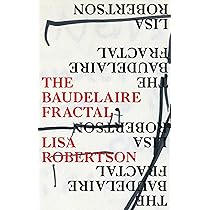
Despite the fakeness of authenticity, can one find authenticity in artifice? In one passage of The Baudelaire Fractal, Robertson meditates on fashion, specifically the notion of the “authentic” brand item and its knock-off. The world of high fashion is notorious for its knock-offs, cheap imitations of the original expensive item. Yet these knock-offs can be handmade by gifted artisans. Perhaps, as Robertson asserts, more authentic than the item they imitate. It is a fascinating reversal of Walter Benjamin’s exploration of mass culture and the aura of the Original. In the neo-liberal capitalist world, with insatiable global demand, the mass manufactured item has become a kind of Original. But it is an Original devoid of any individualized aura, since it is merely a mass produced thing with a designer label attached. (Camp schlock masterpiece Zoolander exposes the exploitative labor at the heart of high fashion.)
As Robertson (as Hazel Brown) explains:
“The lack of authenticity of the green faux-Mügler suit, its obvious citational status, even the cheapness of its viscose fabric, which tended to stiffen and bunch up a little in the rain, requiring careful ironing to roughly restore its line: none of this offended me at all, contrary to the almost religious attitude regarding origin and authenticity which I still then fiercely cherished in all other domains of my experience, aesthetic and otherwise. The knock-off was a document and I was its historiographer[.]” She later asserts “The makers and distributors of knock-offs were close-readers; they discerned the silhouette and the proportion defining the present almost as it was happening, just a demi-breath later, but before it became cliché.”
In drag queen competitions, one of the categories is Real Real. Can one perform to the point of Real Real, fooling (convincing? converting?) those around about the “female” “realness.” (I put quotes around both words because it bespeaks of contingency compounding contingency.) Drag can be something overflowing with artifice, posturing, and fakeness. Yet … yet (!!!), to those participating in these activities, it is an exuberant expression of their authentic selves. Stripped of this “sparkling artifice,” they “pass” and hide the truth of their individuality. To take a pop culture example, Bruce Wayne became his true self when he put on the mask and became Batman. Over time, Batman became his real identity and Bruce Wayne his mask.
And no one cared about Bane until he put on the mask.
Authenticity is what we make it. But in its manufacture, we have to don the masks of artifice. What is one’s “authentic self”? At work? At home? Online? The self isn’t simply a singular, linear, easily taxonomized thing. It is multivalent and polymorphous. And only you – YOU! – can determine its meaning. Not the government, not some religious body, and not those around you. The authentic self doesn’t seek permission from these abstract constructs, nor should it. To seek permission is to abdicate control.
The best way to short-circuit CONTROL is through the subversive alchemy of artifice.
The knock-off is the real thing. The original is fake.
*Upon further research, I have mis-remembered the concept of The New Authenticity. The actual term was The New Sincerity. But seeing how synonymous these two terms are, I’ll stick with my inaccurately remembered term.

 The Driftless Area Review