
A series dedicated to literature in translation whether classic or contemporary.
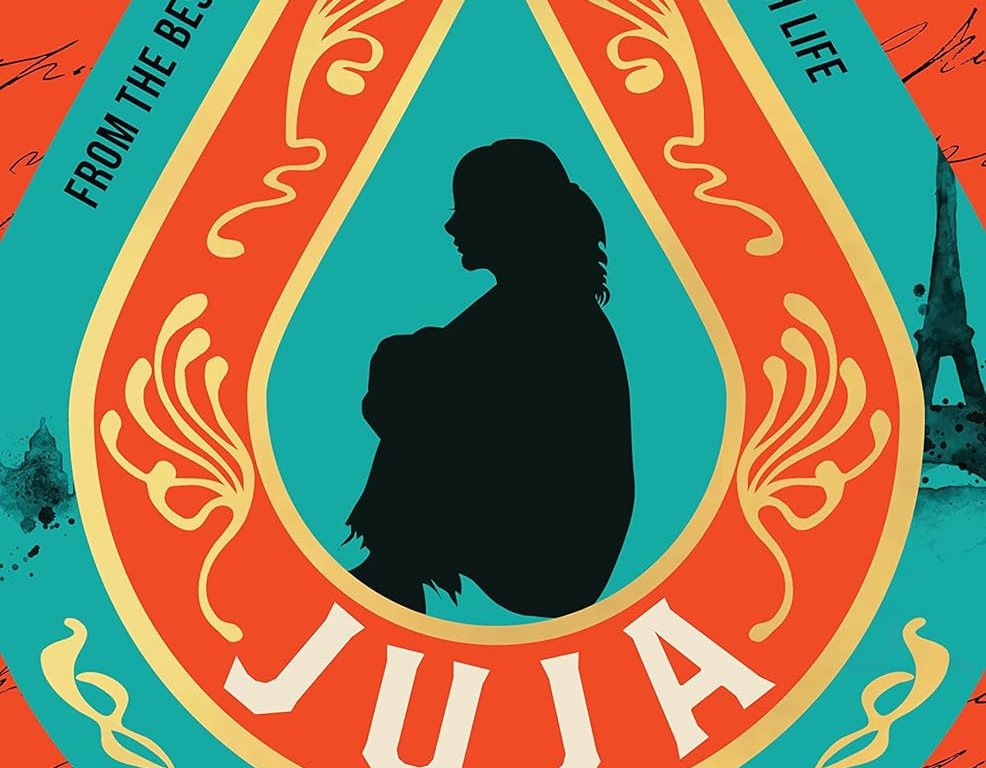
Originally published in German as Juja by Verbrecher Verlag Berlin (2010)
Translated from the German by Ruth Martin
Published by Scribe (2023)
NB: Due to Juja’s narrative structure, this post will be split into two parts. The first part is a traditional book review, summarizing the book and avoiding spoilers. The second part is a literary essay focusing on themes, the over-all narrative, and other matters. So, as per normal operating procedure, if you haven’t yet read the book, skip the essay. After you’ve read the book, you can read the essay without being spoiled. You’ve been warned!
I – The Review
A mysterious manuscript. A rash of copycat suicides. Juja, by Nino Haratischvili, follows a two-pronged literary investigation. In Amsterdam, an art historian and a rather dogged (or stalker-y and annoying) student assistant travel to Paris. They want to find the truth about Ice Age, by Jeanne Saré. Who was she? And why did she kill herself? On the other side of the world, in Melbourne, Australia, an alcoholic woman, herself recovering from her husband’s suicide and filicide of their son, makes an impulsive trip to Paris and discovers Ice Age. In her own amateur quest, she wants to know more about the elusive author of Ice Age.
Throughout Juja, we hopscotch between past and present, near and far. Interspersed with the art historian’s literary investigation and the alcoholic’s descent into oblivion, we read about Patrice Duchamp, a moody student in Paris during the heady days of 1968. While other students participate in the revolutionary protests, Duchamp avoids contact, sequestering himself in his dorm room and writing in a kind of ascetic frenzy. We learn more about his family.
But the real mystery is Jeanne Saré and Ice Age. Destitute, visionary, and idiosyncratic, she wanders around Paris like a distaff Molloy from a Samuel Beckett novel. She bums cigarettes and begs for food. In exchange for whatever leftovers bakers can provide, she pays by telling them stories. Her insistence and energy can be off-putting and strange. The men she hangs around with find her weird and usually run the opposite direction. But these surface eccentricities hide a volcanic genius. This reveals itself in her writing, a kind of free-form Artaud-like, Blake-like onrush of images and scenes. The writing itself wouldn’t seem out of place in the oeuvre of Georges Bataille. It is bizarre and frightening and hallucinatory. Here’s a random excerpt: [italics in original]
I will scream, my scream will be louder than life could withstand! When everyone is asleep … I’ll swim across the Styx. I will push Zeus from his throne, I will roast him and give his flesh to my hyenas, tell them to eat their fill.
[…]
I will strangle you, if you were worth it. If you only knew that right now, while you believe you are loving my flesh, you are really discovering how trivial and stupid you are.
As the novel rolls forward, the art historian and student assistant (who she calls The Freak) move closer to discovering more about Jeanne Saré. Ice Age says little except that she committed suicide by stepping in front of a train at the Gare du Nord in 1953. But then the Freak informs the art historian that there’s no death notices for a Jeanne Saré in 1953. Did Jeanne Saré even exist? And if she didn’t, then who wrote Ice Age?
!!!!!!!!SPOILER ALERT!!!!!!!!!!!!!!!
“It is thus that the few rare lucid well-disposed people who have had to struggle on the earth find themselves at certain hours of the day or night in the depth of certain authentic and waking nightmare states, surrounded by the formidable suction, the formidable tentacular oppression of a kind of civic magic which will soon be seen appearing openly in social behavior.”
Van Gogh, the Man Suicided by Society (1947) by Antonin Artaud
II – The Essay
Juja, as a narrative, is bifurcated into two parts. The first part involves a mosaic of characters, past and present, revolving around the central persona of Jeanne Saré, author of Ice Age / Book 1 (1953). The main thrust of the second section is when the art historian and the Freak finally find out who the actual author of Ice Age is. Narrative, like history, can have a retrospective quality once secrets are revealed and criminality exposed. Gazing backward, one can rest on the laurels of one’s foresight and genius, knowing such revelations are obvious. In the specific case of Juja, the art historian discovers that Patrice Duchamp is the actual author of Ice Age. All of a sudden, the visionary passages and the hard-bitten life Jeanne endured seem like nothing more than artifice. In Juja, the Ice Age passages are written in both italic and standard font. Prior to this revelation of Duchamp’s authorship, the passages seemed both real and lived-in. The italics were Jeanne’s volcanic prose and the regular font was her actual lived life.
The art historian threatens to make his identity public, but prior to this threat, Patrice and her engage in a torrid and torturous love affair. Although love might be too weak a word. Desperation, lust, loneliness, and an uneven power dynamic make the carnal couplings disturbing and sad. Both partners seek comfort in the arms of the other, albeit in a sexual confluence reminiscent of Last Tango in Paris or The Night Porter.
Further revelations include the art historian finding out the Freak’s mother killed herself after reading Ice Age. The last we see of the Freak is him heading down to steps of the Gare du Nord station. Will he commit suicide? Will the pattern repeat itself? We never know, at least never know for sure.
When Patrice admits he authored Ice Age, the art historian confronts him on his culpability with the rash of copycat suicides that followed its publication. In his defense, after college he ended running a small-scale publishing house and put out Ice Age himself. It seemed unlikely, this niche, alienating, and downright weird narrative fragment would cause such a stir. But the copycat suicides created a scandal and he eventually retreated from the business and the world. Is he at fault for those suicides? Is any artist responsible for the actions a reader takes? Take two examples: William Pierce’s Turner Dairies and the works of the Marquis de Sade. It was alleged that the Turner Diaries inspired the Oklahoma City bombing of the Murrah Federal Building. Following the Second World War, many sought to pin the blame of the Holocaust on the writings of the Marquis de Sade. And despite Patrice’s desire to stay out of the spotlight, is he comparable to other real-life French authors like Louis-Ferdinand Celine or Robert Brasillach? Both were Vichy collaborators and unapologetic anti-Semites. Celine’s career was only rehabilitated by the likes of Sartre and other famous authors. Brasillach was executed for his collaborationist writing.
In the end, Patrice isn’t outed by the pair. Patrice explains how he met someone very much like Jeanne and decided to write about her. The novel explores the possibility of her existence. Despite Patrice being a man, can Ice Age still be classified as a kind of apocalyptic feminism? Is he allowed to adopt a female voice? Or is this question biased towards biological essentialism? Can men only narrate as men and women as women? Is this a valid question or utterly preposterous? But Patrice adopting the persona of Jeanne isn’t without precedent, especially in French literature. The libertine, philosopher, and writer Marquis de Sade adopted a feminine persona when he wrote his classics Justine and Juliette.
Juja by Nino Haratischvili is a darkly beautiful exploration of art, tragedy, mental illness, and personal responsibility. The multiple characters, perspectives, and time periods make it a multi-narrative tapestry, winding and weaving, full of echoes and hallucinations, self-destruction and revelation.
*
Questions:
Is an artist responsible to the audience for their work?
What are the limits for freedom of speech in regards to artistic expression?
What’s the difference between being a feminist and a feminist ally?
(No right or wrong answers. Just keep the comments section civil.)

 The Driftless Area Review