
Small-sized reviews, raves, and recommendations.

In this annus horribilisof the Year of Our Lord 2025, the September 11th terrorist attacks have faded from the headlines to become history. Memories fade. Glitches in the matrix of consciousness breed the toxic fruit of disinformation and conspiracy. In the following years, epoch-making events kept piling up, blowing away Walter Benjamin’s Angel of History with hurricane winds. Disaster followed disaster, each one somehow worse than the previous. There is no bottom. There is only the Abyss. When one stares into the Abyss, one is met by sanctimonious vipers wearing red hats and mouthing “Thoughts and prayers” with all the verbal emptiness of an erectile dysfunction ad. Despite all the stupidities and atrocities and banalities, we, as a culture, as a civilization, somehow endure. In the words of Leonard Cohen, “Give me Christ / or give me Hiroshima.”
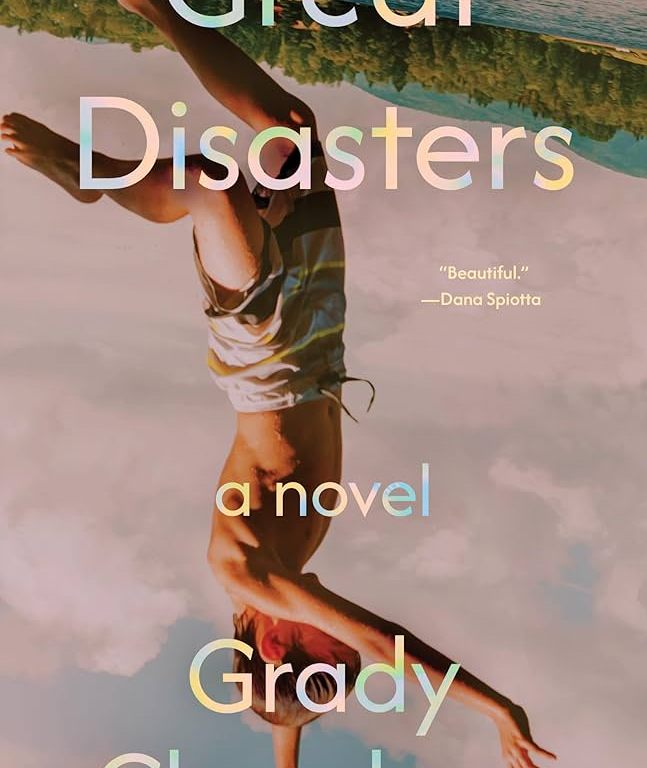
Amid the chaos and calamities, foreign and domestic, we have Great Disasters: A Novel, by Grady Chambers. It follows the lives of six high school friends from Illinois as they grow up and live their lives. The narrator, a guy named Graham, examines their lives with a merciless eye, unafraid to expose a “warts and all” story. He does his best to avoid the maudlin sentimentality of nostalgia, although, as self and friends age, it is hard not to look back and have regrets. We all have to live with our regrets, since it is inextricably enmeshed into human experience. The challenge remains to not be consumed by these regrets.
Great Disasters is a personal chronicle of the post-9/11 generation. Graham is both a part of a friend and simultaneously standing apart. As most of his friends head off to college, he stays attached to a younger girlfriend, Sam, who is still in high school. This apartness is reminiscent of Giovanni Ribisi’s Seth from the 2000 film Boiler Room. The eccentricity of Graham’s relationship highlight his status as less a participant than an observer. One of his observations is the love shared by his friends Ryan and Jana. Jana, an aspiring ballet dancer, is the girlfriend to Ryan, a loveable asshole and serial fuckup. (His character is like James Franco’s “burnout” character in Freaks and Geeks.) Also playing a supporting role in the misadventures of the six friends is alcohol. (This reviewer is by no means a teetotaler, but the sheer volume and omnipresence of booze consumed by these friends is astounding. The booze consumption very soon exhibited itself as a problem.)
During one of these alcohol-fueled episodes, the friends play a cruel trick on Ryan. During a stay at a friend’s vacation house, they switch the train schedules on the fridge. Ryan was supposed to visit Jana during an important rehearsal. Because of the prank, Ryan misses her rehearsal, the relationship eventually ends and both partners go their separate ways. Graham feels regret for participating in this prank. As life goes on, the regret keeps gnawing at him. In the meantime, he goes to college and grad school, loses touch with Sam, and eventually lands his “dream job.” It is working at a political non-profit. It seems the right fit, but he realizes it isn’t what he wants to do. The son of committed suburban “leftists,” he remembers marching against the Iraqi Invasion. Despite being raised in the sheltering carapace of white privilege, he also can’t dodge the fact that his friend, Ryan, is in Iraq with the Marines.
Chambers, an award-winning poet, has written a modern bildungroman, a personal reflection of these frankly godawful times. His prose shimmers with a latent poetic beauty. The lives feel real and authentic. The narrative chugs along without the artifice of contrivance, even though beneath the effortless prose is an expertly constructed story. Grady Chambers could provide a great candidate for that often-maligned status: “Voice of a generation.” This voice, channeling and forging the thoughts and experiences of a generational cohort, can come from unlikely sources. It isn’t the crass sentimentality of wannabe auteur Zach Braff, the real voice of this battered post-9/11 generation comes from a novelist who wrote about lives of six friends growing up the Midwest.

 The Driftless Area Review