Small-sized reviews, raves, and recommendations.

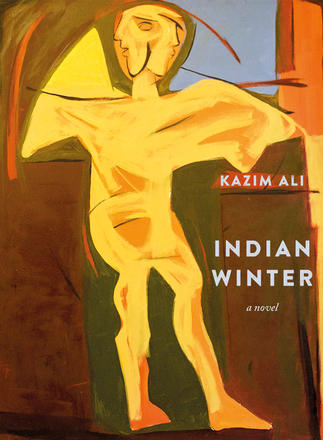
After leaving his home and his lover, the narrator travels to India for the winter. While there, he visits music festivals, reconnects with his family, and meets new friends. Indian Winter, by Kazim Ali, is, at times, a fragmentary, solipsistic, and sensual meditation on love, travel, and the writing process. Ali has traveled widely, lived in the UK, United States, Canada, India, France, and the Middle East. He is a poet, translator, novelist, and organizer. And, like the narrator of Indian Winter, a queer writer and translator.
In the novel, the narrator receives an offer to attend several literary festivals in India. Because of this, he leaves his lover, Ethan, and the Midwest farm where they both live. During his travels, he meditates on the death of a previous love, Michael, and his various attempts at writing a novel about this lost love. Nostalgia is tinged with grief, since Michael is dead, yet tenaciously survives in his memory. During his flight over, he meets Surya, a young Indian man who had never been on a plane before. The chance meeting may or may not develop into a mutual attraction.
Indian Winter makes reference to the works of Marguerite Duras, Anais Nin, and other writers. In the opening pages, he recounts taking a fall on his bike. “As I fall, I grieve for the body: the weak one, the stupid one that makes always the same mistakes, this one: mine.” Later, during a photo shoot wherein he’s the subject, he ruminates over how a face is described in The Lover by Marguerite Duras. “He [the photographer] says I am beautiful but more than anything I think I look ravaged, old. It makes me think of the opening of The Lover, in which Duras is approached by a man who had known her long before who tells her that he finds her older, aged face more beautiful than her younger one. In the English translation, by Barbara Bray, the man uses the word ravaged to described Duras’s face, but in French the word Duras wrote was dévasté– devastated.” (Italics in original.)
This is one of those novels – although “novel” may not be the right word – that could be classified as autofiction. Crudely put, the narrative is “lightly fictionalized.” But how lightly and what parts may only be known to Ali himself. In a narrative filled with raw emotion and scenes of incredible vulnerability, the fictional facade provides a necessary shield. Otherwise it would have been too unbearable to write. Evidence of this searing pain in the writing process is the narrator’s constant wrestling with the title for a novel about his dead lover. It begins as Michael: A Novel, pretty straightforward until the narrator finds this insufficient. Then a new subtitle. It becomes Michael: An Effacement. The fictional coating has been replaced by a rather pretentious new identity, although one that signifies erasure and forgetting. Finally, he settles on Michael: A Romance. The new subtitle grants the narrator an opportunity to brood over the multifaceted aspects of love, including things like adultery, jealousy, lust, and sex.
These literary meditations become further complicated by Ali’s identity in his home country. Living abroad, does he consider himself an Indian, an expat, etc.? Further complications arise, since he’s a practicing Muslim, a religion considered alien, other, and dangerous by the Hindutva political movement. (A reactionary ethno-chauvinist movement slathered in extrajudicial violence, historical vandalism, and exploiting religion for political ends. Basically, MAGA and the Religious Right in the United States do the exact same thing.) His otherness as a Muslim becomes intermingled with his status as a gay man. Indian Winter is also a snapshot of the gay Indian milieu in Modi’s India. Despite the persecution from the state and from their own families, gay Indians survive and endure the indignities vomited forth from sanctimonious hypocrites.
Although it is shot through with suffering and grief, Indian Winter is not all doom and gloom. It is an exploration of the writing process, the varieties of love, and the appreciation for a place rife with beauty and sensuality.

 The Driftless Area Review