A series dedicated to literature in translation whether classic or contemporary.
Translated by Sora Kim-Russell & Youngjae Josephine Bae
Originally published by Changbi Publishers (2020)
Scribe (2023)
“When nine-tenths of Africa had been seized (by 1900), when the whole world had been divided up, there was inevitably ushered in the era of monopoly possession of colonies and, consequently, of particularly intense struggle for the division and the redivision of the world.”
Imperialism, the Highest Stage of Capitalism: A Popular Outline(1917), by V.I. Lenin
“Every single empire in its official discourse has said that it is not like all the others, that its circumstances are special, that it has a mission to enlighten, civilize, bring order and democracy, and that it uses force only as a last resort. And, sadder still, there always is a chorus of willing intellectuals to say calming words about benign or altruistic empires, as if one shouldn’t trust the evidence of one’s eyes watching the destruction and the misery and death brought by the latest mission civilizatrice.”
Orientalism(1978), by Edward Said
Chani: Our warriors couldn’t free Arrakis from the Harkonnens. But one day, by Imperial decree, they were gone. Why did the Emperor choose this path? And who will our next oppressors be?
Dune (Denis Villeneuve, 2021)
Heyward: I thought British policy is ‘Make the World … England’, sir.
Last of the Mohicans (Michael Mann, 1992)
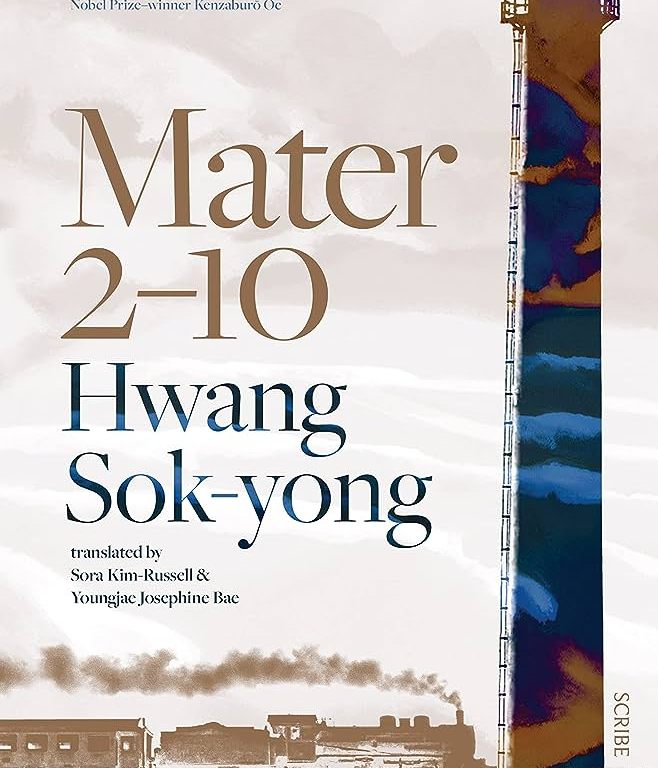
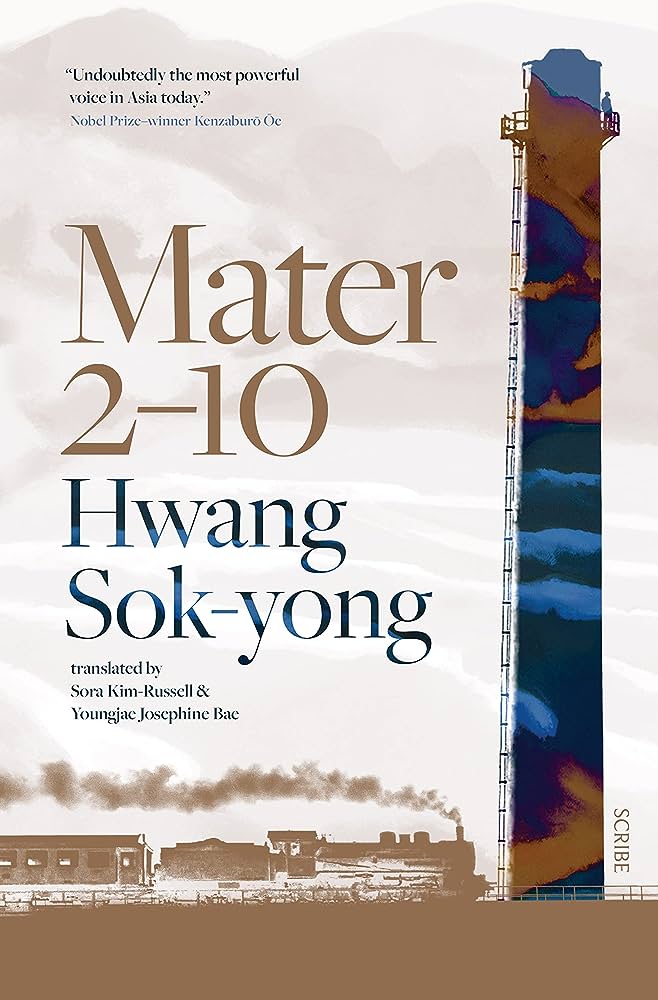
This is the story of Yi Jino and his one-man sit-in strike atop a sixteen-story factory chimney in Korea. Laid-off from work, his makes his symbolic stand in an effort to bring a corporation to the negotiating table. In his solitude, he does exercises, reads, and has visions of relatives from years past. Mater 2-10, by Hwang Sok-yong, chronicles Jino’s sit-in, weaving together Korean history and Jino’s family history into a multi-generational saga. The title takes its name from a famous locomotive that traveled up and down the Korean peninsula during the days of Japanese occupation. Jino himself comes from a family of railroad workers.
Translated with adept skillfulness by Sora Kim-Russell and Youngjae Josephine Bae, they perform the miraculous feat of making the text both approachable and foreign. Their goal was how they “looked for ways to decolonise our translation.” The majority of the novel takes place under Japanese occupation. (Japan occupied Korea from 1910 to 1945.) They ask, “When the novel’s characters are ordered by their Japanese bosses to change their names on the spot because Korean is too difficult to pronounce, what is the English translator’s duty?” This is a vexing question. Why do all the Russian crewmen in the Hunt for the Red October movie speak in British accents? When does audience accessibility turn into cultural erasure?
In the novel, Jino speaks with dead relatives. He is transported back in time to witness the past. His personal observances soon transition into lengthy passages about long-lost relatives. Hwang calls his style of narrative “mindam-realism.” What this means is a novel composed of personal anecdotes and/or tall tales one hears during family gatherings or holiday meals. As Hwang relates in the Afterword (originally appearing in the 2020 Korean edition): “At times the book grows more serious, but in the end those tales have a way of gently wrapping their arms around the glaring light of facts, like a faded photograph or an antique.” Mater 2-10 also stands out because it is the rare case of a Korean novel “that featured industrial workers as the main characters.”
In the early 2020s it is difficult to imagine anyone thinking North Korea as a worker’s paradise. The hermit kingdom and its dynasty of decadent, rotund authoritarians as an exemplar of Marxist ideals seems ludicrous and laughable. Think of David Letterman’s constant jokes about “Menta Lee-il.” Within Jino’s family saga we get the story of Icheul and Ilcheul. Ilcheul grows up to be a responsible worker, family man, and loyal subject of the Japanese Empire. His brother, Icheul, comes across as a good-for-nothing layabout. He eventually becomes a labor activist and political agent for the Marxist underground. During these narratives, the reader becomes educated on the operations of steam locomotives used in Korea and, simultaneously, the endless factionalism and frustration embedded within the labor movement. The worker exploitation mirrors Jino’s own struggles with an apathetic corporation that laid-off all its longstanding, loyal workers and moved its factory elsewhere. As Jino’s days atop the tower increase from weeks to months, we also read about resistance and collaboration with the Japanese Empire.
Despite its leftist sympathies, Hwang endows the narrative with a multifaceted perspective. Despite heroism and villainy abounding, there are no clear-cut villains or heroes. Hwang tells stories of individuals, replete with acts of heroism, frailty, shortsightedness, and stubbornness. To complement stories of worker resistance, there is the story of Icheul’s fellow classmate. Daryeong, the lowly son of a pig farmer, climbs his way up the police hierarchy. Later adopting the name Yamashita from his Japanese superiors, he makes it his mission to smoke out communists, activists, and those against the Japanese empire. But through Hwang’s narrative skill, the reader comes to understand, not necessarily sympathize, with Daryeong’s decisions to become a collaborationist. His motives didn’t appear in a vacuum. Despite his repeated use of torture against the anti-imperialist forces, he doesn’t come across as a one-dimensional villain or ideological strawman. He has his reasons.
As the novel draws to a close, the Japanese Empire collapses during the onslaught of Allied forces in the Pacific and Manchuria. But even as the history of Korea as Japanese colony ends, the history of Korea as American begins. Hwang peppers the novel with incidents of the Korean police forces and right-wing gangs beating up labor activists. Daryeong goes into hiding for a brief time after the Japan’s surrender, only to re-emerge as a police officer under American control. Korea, like Vietnam, merely traded in its colonial oppressors. Does it really matter if capitalism offers more choice of shiny products if one isn’t living under one’s own political sovereignty? Who cares if capitalism is the better option if you’re still a subject of yet another colonial regime? While this seems like an absurd question today, in the immediate aftermath of the Second World War, it seemed a legitimate option. One doesn’t have to agree to understand the motivation for seeing communism as a means of salvation from Japanese political and economic exploitation. Because no matter how good a Korean was or high up the career ladder they got, they still were only paid half that of their Japanese puppet-masters.
Mater 2-10 ending is bittersweet and darkly comic, at least in a Beckett-ian sense, but a richly rewarding read. For those, this reviewer included, whose knowledge of Korean history is sparse, it offers an accessible corrective for these faults and voids. Seeing the Korean War from the Korean perspective is fascinating and eye-opening. (Hwang came under fire for a visit to North Korea, although his talks with individuals there provided inspirational sparks for the writing of this novel.) This is a novel that shines a light on what it means to be an industrial worker in Korea and to wrestle with the issues of worker exploitation, international tension, and a still-divided nation.

 The Driftless Area Review
