Small-sized reviews, raves, and recommendations.
Ben Geisler: Wallace Beery. Wrestling picture. What do you need, a roadmap?
— Barton Fink (The Coen Brothers, 1991)
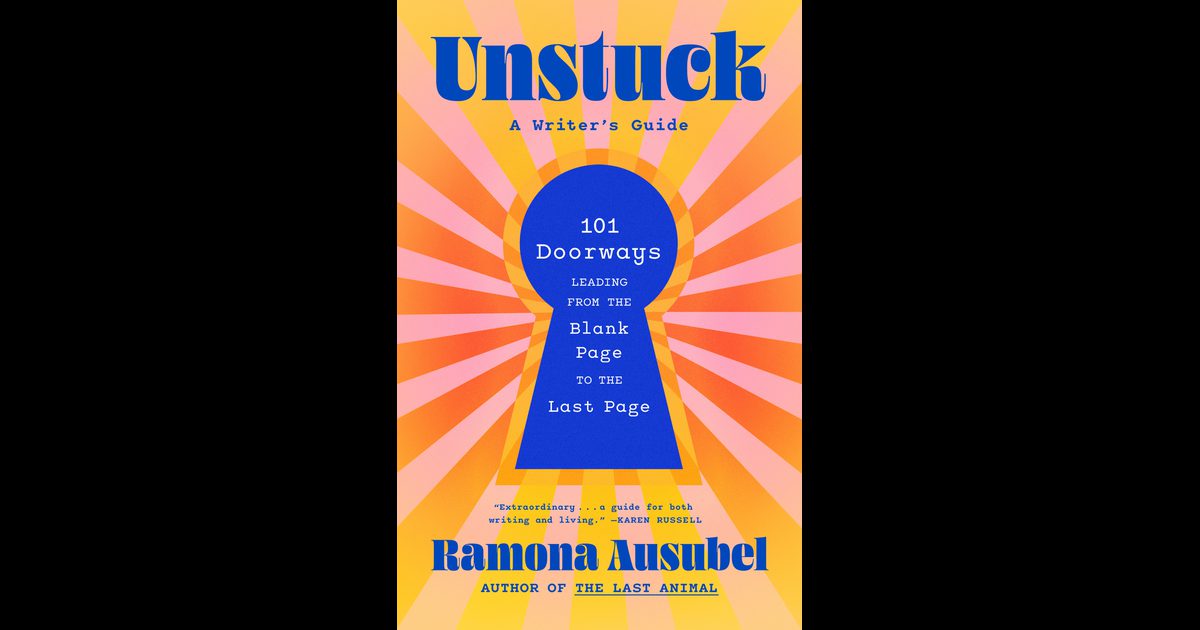
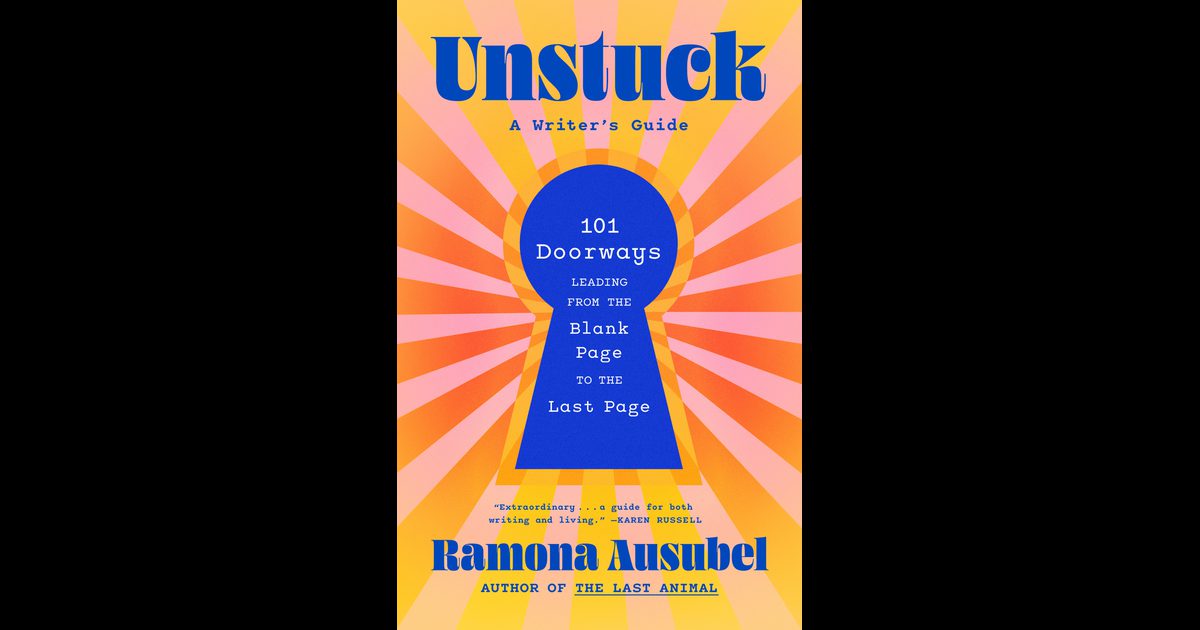
Writing is hard. It can be a solitary exercise. Finding the time and motivation can be a challenge. Unstuck: A Writer’s Guide, by Ramona Ausubel, helps the writer find a comfortable headspace to write, plan, and thrive. The books full title says it all, Unstuck: 101 Doorways Leading from the Blank Page to the Last Page. Divided into four sections, the first, “Doorways In: Beginning,” helps with the process of turning the blank page into a completed first draft. The second, “Doorways Through: Continuing,” works with both tightening and expanding the first draft into a working draft. The third, “Doorways Up: Getting Perspective,” assists in creating a draft ready for submission and entering the public sphere. The last, “Doorways Out: Later Drafts and Moving On,” helps with polishing the final draft.
It was refreshing to read each “Doorway” and its “key.” Some I found useful, some I did not. But this could be expected from a book that has 101 doorways. With a book like this, it could be read (in at least) two ways: straight through, and/or piecemeal. Depending on your situation and your creative process, there would surely be something you can extract from this book. Several kinds of common writing challenges could be overcome by exploring these doorways and their keys. One of them include dealing with the abyss of the blank page. Or, more accurately these days, with a blank screen.
Ausubel offers practical advice when attempting to fill the blank screen with something, anything. Doorway #29 is “Write the Shit Out of Your Darlings.” She accepts the inherent truth of the writerly cliché of “kill your darlings,” but with the caveat that’s is usefulness is more applicable “in late drafts.” In the “key” section, she says “If your first draft is populated with your own curiosity and fury and laughter, with darling after darling after darling, that draft is a living thing.”
Similarly, Doorway #28 is “Against the Magnum Opus.” In other words, don’t make the stakes so high that you’ll choke when you’re in front of your computer screen. Sure, everyone wants to pen the Great American Novel, but that’s not always possible. Or even practical. Don’t settle, but also don’t set yourself up for failure.
And Ausubel comes with knowledge about the writing process. Besides being a published novelist, she comes at the craft from the perspective of a working writer. She’s a parent, spouse, pet-owner, and academic. Even though she teaches creative writing, that doesn’t mean that finding time to attend to her own creative projects is at all easy. Think of the folktale about the cobbler who couldn’t find time to make his own shoes. She respects a writer’s choice not to write. This could be for many legitimate reasons, including job and parenting responsibilities. Between work, household chores, and maintaining some semblance of a social life, carving out an hour or two to actually write something is all that more of a real challenge. Early on, she offers the practical advice of goal-setting. Guestimate the page count of a writing project: a poem, a short story, a novel, etc. Depending how long it is, say, a 250-page novel, parse out a daily page count to achieve. Or, if not daily, when you can. She discussed writing two or three pages every work-day (excluding weekends), meant you could write a draft of a novel in a couple months.
In later sections of the book, she offers perspectives on adding depth to characters and settings. These include telling a story through the objects a character owns. Another involves telling a character’s biography through their Internet search history. The common advice of reading a draft aloud is augmented by having an AI voice read it. (One hears this all the time with YouTube’s torrent of AI slop. When the bot’s pronunciation fumbles over a word or phrase, it is easy to spot.) One could also go “old school” and run their story through a text-to-speech program.
Unstuck was a fun, but also useful, handbook to help a struggling writer with their drafts. Whether it is starting a first draft, bulking up a working draft, or polishing a final draft, Unstuck can help. It is practical and varied in its advice, and Ausubel is sympathetic to a working writer’s everyday challenges. If you can’t write, because of this, that, or other thing in your life, that’s okay. Life happens. Unforeseen circumstances pop up all the time. Especially in a time and place as obscene and incomprehensible as the contemporary United States. But when you can find the time to write, Unstuck can help if you’re stuck or you choke staring at the blank screen.

 The Driftless Area Review