Small-sized reviews, raves, and recommendations.
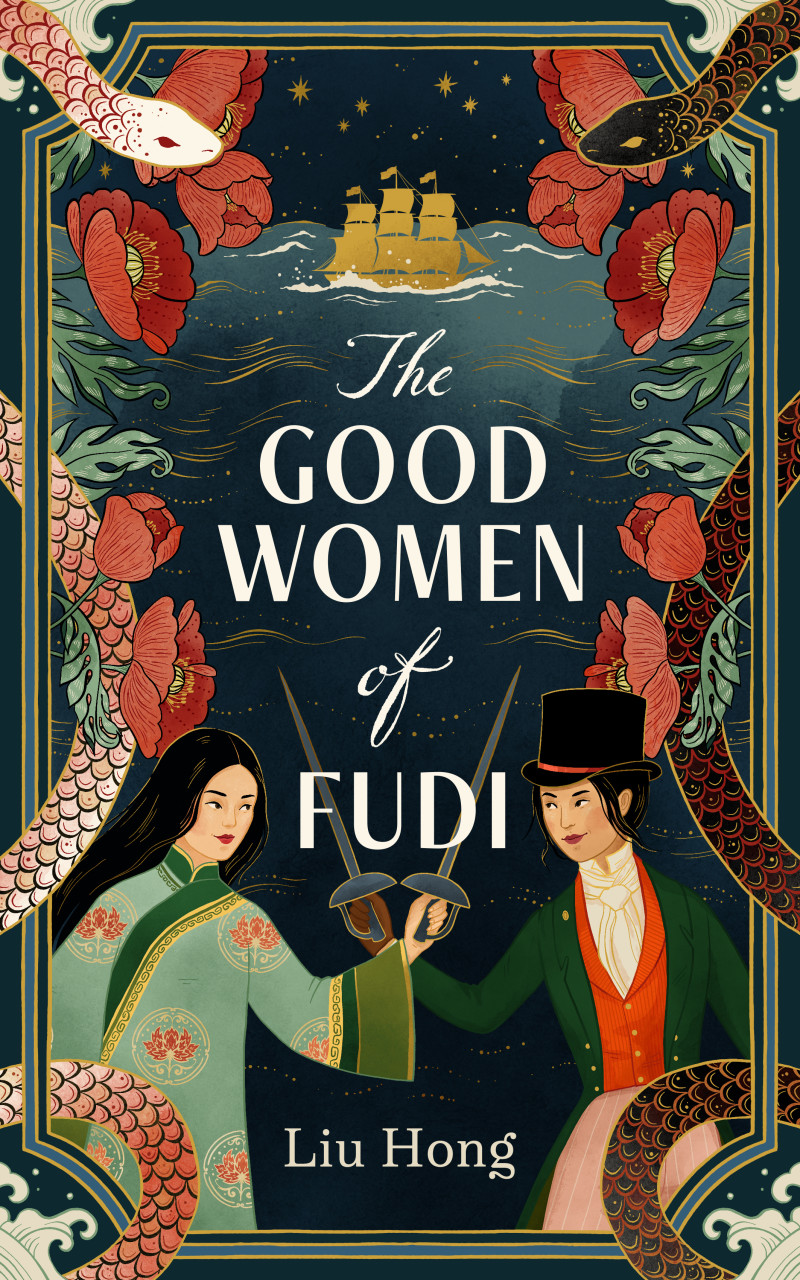
In the Chinese harbor town of Fudi a conflict erupts. Childhood friends Jiali and Wu Fang have a relationship unknown to the world of men. Sword fighting, dressing up in men’s clothing, and exchanging couplets, all seems well and good until Wu Fang discovers Jiali is set to marry. Complicating this fraught relationship is the arrival of “ocean man” Charles. The Good Women of Fudi, by Lui Hong is a torrid romance that shows how love can transcend traditional gender expectations and national borders.
While Jiali marries Yanbu, a college professor and colleague of Charles, the Englishman, Wu Fang returns to China in her ambition to become the first woman doctor. Jealousy, tradition, and an impending war between China and the United Kingdom thread through the novel. At its heart, Good Women is a romance. Wu Fang loves Jiali and Charles loves Jiali. Jiali is torn between loving her husband Yanbu and her love for Wu Fang. To complicate matters further, while not explicitly stated Charles has feelings for Jiali’s husband Yanbu, but whether this is simply a matter of “masculine camaraderie” as was the norm in Edwardian England or something more is never fully elucidated. Which is good. The cryptic nature of the homoeroticism remains something subterranean, ambiguous, or merely the subconscious projection of the reviewer. Am I reading too much into it? Am I projecting my 21st century biases on to the narrative? (With marriage equality and gay rights a now integrated notion in Western society … and China’s not-too-subtle homophobia, who can tell?)
The novel follows Jiali’s clashes with her more traditionalist mother. (Although her mother isn’t quite who she seems to be.) To inflict foot-binding on other women becomes a hot-button issue. Some traditions should be respected and preserve the heritage of a culture. Other traditions, like foot-binding, clitoridectomy, and anti-abortion legislation are biased, misogynistic, and stupid. Although it is one thing to rail against these barbaric practices in the 21st century. It is another when during the Edwardian era.
Like all good romances, Good Women displays the inherent decency of people. The novel offers a comfortable escape from the yawning abyss that has become the year 2024. The only real flaws, if any, may be that the Great Britain is shown as an intellectually progressive realm and China a backwards morass of superstition. Neither is quite true. Despite Charles’ efforts to educate the women of Fudi in Jiali’s school and his admiration for their Buddhist ideals, Britain is still a rapacious colonial regime. Education is one in-road to colonial domination. On the other hand, China can claim tradition all its wants, in those post-Opium War years, it still was a corrupt tyrannical regime, quashing revolutionary activity at every turn. But this is a romance novel, not a Robert Kagan travelogue. It remains a highly enjoyable novel and a breath of fresh air in this dark and idiotic times.
Post-script: Props to Jessica Cruickshank for her excellent illustration and cover design.

 The Driftless Area Review