

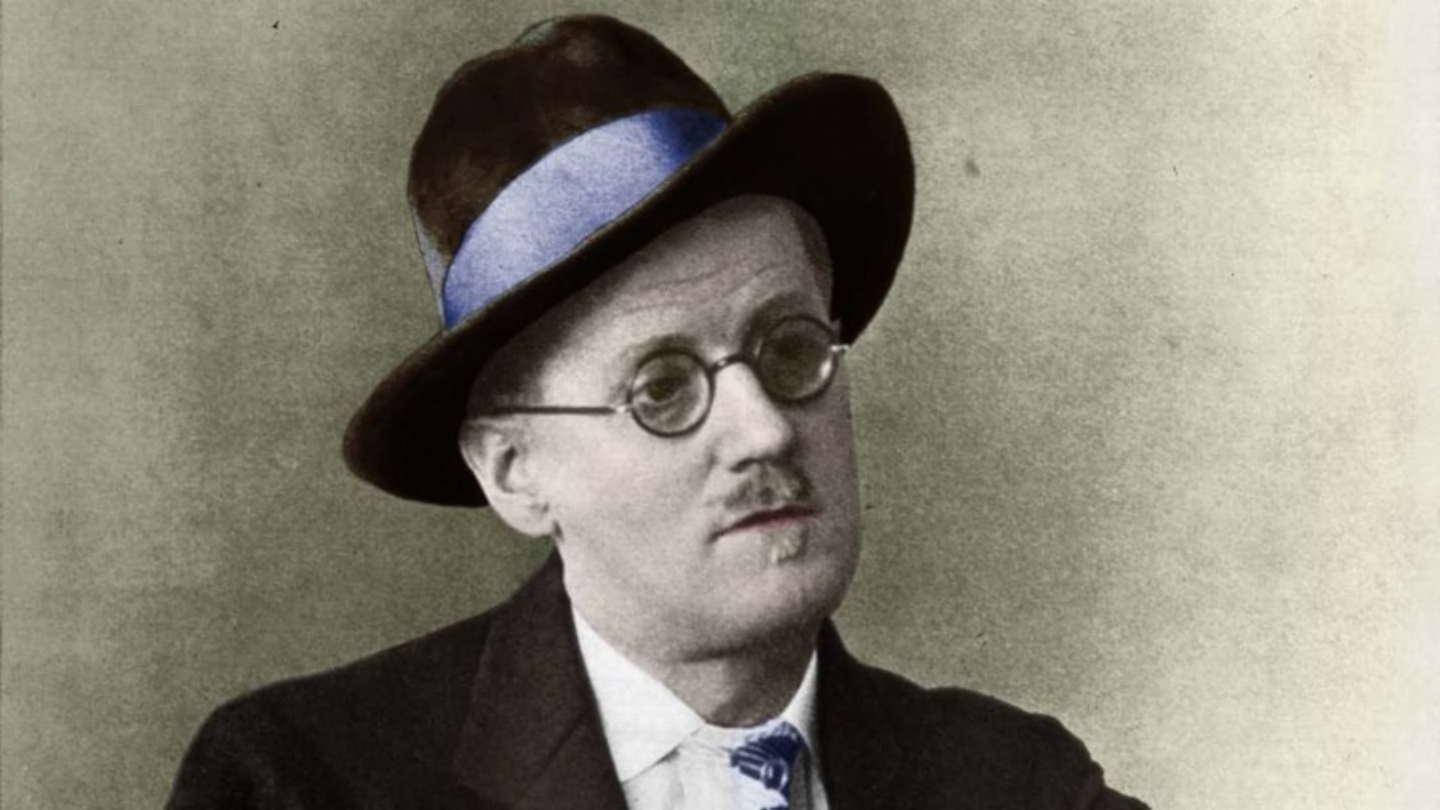
JOYCE: POLYSEMIC, POLYMATHIC, POLYMORPHOUS
Ulysses (1922) and Finnegans Wake (1939) offer a capacious feast. These twin monuments to Joyce’s genius bloat with linguistic excess. Each novel tips the scale with page length, each a Rabelaisian carnival of puns, references, psycho-geography, and formal experimentation. Joyce doesn’t adhere to the philosophy of “less is more,” no, these two novels are all about “more is more.” The first follows the perambulations of a Jewish adman over the course of a single day in Dublin, Ireland, and the second traces the dreams of a mythological everyman. Day and Night. An individual and an archetype. No wonder Samuel Beckett had such a hard time crawling out of the shadow of the Irish master.
Joyce also enlarded these two famous works with meaning. Whether it is Gilbert Stuart’s schemata for Ulysses or Joseph Campbell parsing the symbolism of Wake, countless have struggled to “solve” the linguistic problematics of Joyce’s prose. This common presupposition – that an aesthetic work can be “solved” via non-aesthetic means – implies there is an inherent teleological point at which the exegete will encounter enlightenment. Art is not math, at least from the perspective that one can reach an end-product through the use of proofs and predetermined principles. There will be as many interpretations of Wake as there are people and it will be mulled over, picked at, vivisected, and investigated until the heat death of the Universe.
Both Ulysses and the Wake expose the frailties and chaos of language. As Marx for political economy and Freud for the mind, Joyce’s creative output operates as a colossal destabilizer to preconceived notions about how a novel operates and even what a novel is.

 The Driftless Area Review