Interview with Author Mary Kennedy Eastham

West Coast author Mary Kennedy Eastham has been quite busy lately.  Her book of poetry, the Shadow of a Dog I Can’t Forget, was one of my first review copies I received.  I talked with her via an email interview.  Here is what she had to say about her recent projects, the art of writing, her love of dogs, and her favorite writers. WHAT ARE SOME OF YOUR CREATIVE PROJECTS? I am trying so hard to finish my novel NIGHT SURFING.  Writing a novel is very different from writing a short story or writing a poem.  There are so many more … Continue reading Interview with Author Mary Kennedy Eastham
Rate this:

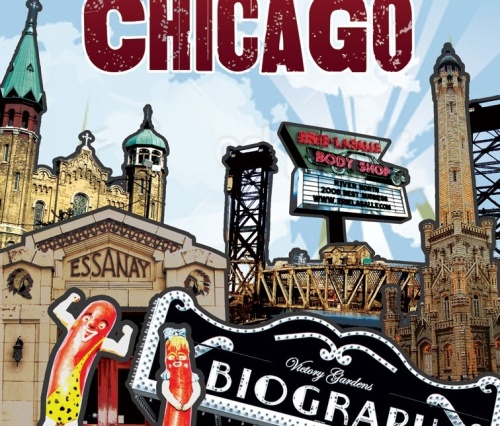
Oldest Chicago by David Anthony Witter

David Anthony Witter puts a new spin in the crowded field of travel guides.  Oldest Chicago offers the reader a guide to the oldest places in Chicago and its suburbs.  The guidebook encompasses everything from the commonplace (oldest school building: St. Ignatius College Prep, 1869) to the esoteric (oldest tamale shop: La Guadalupana, 1945).  From the oldest church to the oldest magic shop to the oldest slaughterhouse, they are all in here and much, much more. Witter seamlessly blends the historical, the informative, and the personal into a unique take on the travel guide.  Throughout the guide, the dark undercurrents … Continue reading Oldest Chicago by David Anthony Witter

Rate this:

Critical Appraisal: The Landscape of Hell

The representation of Hell as a cartographic region has its origins in Dante’s Divine Comedy.  Dante adapted the imagery already present in medieval painting and sculpture to comment on his political situation and his own scientific and theological beliefs.  He populated it with real people, including political heroes and villains, good popes and bad popes, adulterous princesses, and monsters human and mythological.  On Dante’s spiritual journey, he traveled with the Roman poet Vergil down the various circles of Hell and then up Mount Purgatory.  Finally, led by his beloved Beatrice, he journeyed through the heavenly spheres until he was in … Continue reading Critical Appraisal: The Landscape of Hell

Rate this:

Grand New Party by Ross Douthat and Reihan Salam @ Joe Bob Briggs

The United States has a lot of problems. On occasion, someone might have a bright idea on how to solve those problems. The book asserting it can fix all America’s problems is Grand New Party: How Republicans can win the working class and save the American Dream by Ross Douthat and Reihan Salam. The main idea of Grand New Party is for the GOP to offer an agenda that would help a pan-ethnic working class. Unfortunately, it seems that the people most in need of reading this book have not done so. Arizona attempted to solve its immigration problem in … Continue reading Grand New Party by Ross Douthat and Reihan Salam @ Joe Bob Briggs

Rate this:

Critic’s Notebook: Unpopular Causes, Part V

Two Personal Favorites: Spook Country (2007) and Domino (2005) Spook Country The toughest challenge for any author is to follow up a big hit with an equally big hit.  Following the epic genius of Gravity’s Rainbow, Thomas Pynchon released the misunderstood novel Vineland.  In the case of William Gibson, he experienced career resurgence with the release of Pattern Recognition, an “empathetic thriller” about advertising, intelligence, and an elusive video.  Gibson set the novel in the present and it reads like a strange relic, an artifact set in a world after 9/11 but before YouTube. Spook Country follows the same general … Continue reading Critic’s Notebook: Unpopular Causes, Part V

Rate this:

Critic’s Notebook: Unpopular Causes, Part IV

Nathan Rabin and the Countercanonical Critique The AV Club has carved out a niche of reputable pop cultural criticism.  Nathan Rabin has been profiled before in the Art of Reviewing.  It focused on his unique style and examined his ongoing series My Year of Flops.  Rabin’s bombastic style plays off his subject matter, whether it is a movie that bombed at the box-office or a hip hop review.  Rabin has expanded his critical eye to include country music (Nashville or Bust!) and pop ephemera (THEN! That’s What They Called Music). Movie flops, the NOW That’s What I Call Music! compilations, … Continue reading Critic’s Notebook: Unpopular Causes, Part IV

Rate this:

Critic’s Notebook: Unpopular Causes, Part III

Reappropriation: Camp, Kitsch, and Sincerity “When something is just bad (rather than Camp), it’s often because it is too mediocre in its ambition.  The artist hasn’t attempted to do anything outlandish.” – “Notes on Camp” [1965], Susan Sontag “Need more clarification? To his fans Liberace was the epitome of cultured taste, but of course we know he was kitsch. However, unlike the not-quite-weird-enough musical stylings of ABBA, say, or the Village People, Liberace-style kitsch is so weird, so outré, that hipsters find it impossible to appropriate as cheese. Liberace didn’t make his work inappropriable on purpose; others, however, have. The … Continue reading Critic’s Notebook: Unpopular Causes, Part III

Rate this:

Critic’s Notebook: Unpopular Causes, Part I

“In place of a hermeneutrics we need an erotics of art.” – “Against Interpretation” [1964], Susan Sontag Challenges and Non-Responses The job of the critic is, by turns, tastemaker, evangelist, and champion.  The best critics harness the powers of intellection and enthusiasm to inform his or her readership on a work’s merits.  If a work receives more merits than demerits, than, in a roughly mathematical fashion, the creator obtains a “good review.”  This reviewer finds works with “mixed reviews” or polarizing reactions (see Jonathan Littell’s The Kindly Ones) most attractive, since “mixed reviews” are not sure things.  A tiny element … Continue reading Critic’s Notebook: Unpopular Causes, Part I

Rate this:

Miss Lonelyhearts & The Day of the Locust, by Nathanael West

The short tragic life of Nathanael West produced four novels.  Dying penniless and alone, West bequeathed a literary legacy that has reverberated in the works of Alexander Theroux and Thomas Pynchon.  The two works collected here, “Miss Lonelyhearts,” a long short story, and The Day of the Locust, a novella; offer the reader a sampling of West’s scathing apocalyptic satire.  In little over 180 pages, the reader encounters ferocious black humor, hard-boiled surrealism, and apocalyptic visions.  Nathanael West belongs to the family of innovative literary Modernists like T.S. Eliot, Samuel Beckett, and William Faulkner. “Miss Lonelyhearts” is a story about … Continue reading Miss Lonelyhearts & The Day of the Locust, by Nathanael West

Rate this:

Jesus of Nazareth by Paul Verhoeven

At first glance, the idea that Paul Verhoeven, director of Basic Instinct, Robocop, and Starship Troopers, wrote a book on Jesus strikes one as the set-up to a particularly tasteless joke.  Fortunately, Verhoeven offers the reader his perspective on the Historical Jesus in his book, Jesus of Nazareth. Trained in mathematics and a prolific filmmaker, Verhoeven has been a member of the Jesus Seminar since he moved to Los Angeles in 1985.  He occupies a unique intellectual position within the Jesus Seminar due to his status as non-academic, non-theologian, and non-believer.  (But belief is not a prerequisite to historical investigation … Continue reading Jesus of Nazareth by Paul Verhoeven

Rate this: