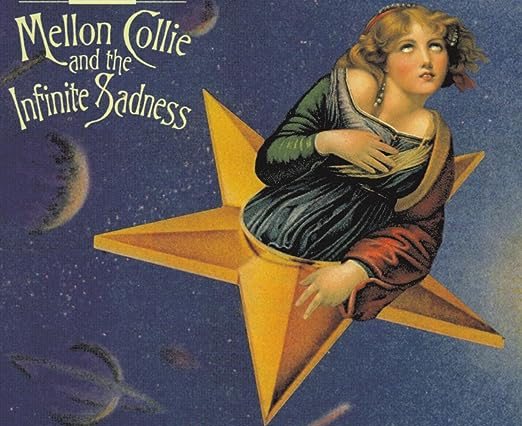
TOP THREE SLUDGE: NUMBER 3: “X.Y.U.” by The Smashing Pumpkins
“X.Y.U.” is a bracing seven minutes of primordial sludge. Continue reading TOP THREE SLUDGE: NUMBER 3: “X.Y.U.” by The Smashing Pumpkins

“X.Y.U.” is a bracing seven minutes of primordial sludge. Continue reading TOP THREE SLUDGE: NUMBER 3: “X.Y.U.” by The Smashing Pumpkins

Thought experiment: George R. R. Martin is The Beatles. R. Scott Bakker is The Velvet Underground. Continue reading CCLaP Fridays: The Great Ordeal (The Aspect Emperor: Book Three), by R. Scott Bakker

I interview the poet R. Douglas Jacobs, author of Gethsemane: a Poem About Us. We discussed the creativity, sacrifice, and the epic. Continue reading The R. Douglas Jacobs Interview

This week I explore Storm Constantine’s trilogy Wraeththu, about a hermaphroditic human species that overtakes humanity during a postapocalyptic catastrophe. Continue reading CCLaP Fridays: On Being Human: Wraeththu, by Storm Constantine

This week, Karl Wolff reviews Richard Sharp’s novel “The Duke Don’t Dance,” tracing several friends across decades and continents from the jungles of Southeast Asia to a DC lobbying firm and beyond. The novel combines nuanced literary observations with cutting satire. Continue reading CCLaP Fridays: The Duke Don’t Dance, by Richard Sharp

Subtitled “A Historical Novel of Puget Sound,” Michael Schein’s Bones Beneath Our Feet tells us the story of two men, Isaac Stevens, Mexican-American War veteran and first governor of Washington Territory, and Leschi, Chief of the Nisqually tribe. Published by Bennett & Hastings, a Seattle-based independent publisher, the novel, at first glance, appears like yet another retelling of a White Man-vs.-Native American conflict told with the subtlety of an afternoon special. “Remember kids, the white man is a pure embodiment of evil while the Native Americans are innocent, Nature-loving gentlefolk.” This is the simplistic moralizing found in everything from Dances … Continue reading Bones Beneath Our Feet by Michael Schein

I: The Mount Everest of Modernism “It is not the mountain we conquer, but ourselves.” – Sir Edmund Hillary The Cantos. Ezra Pound. The very mention of those names send shudders down even the most well-read literary snob. T. S. Eliot’s “The Waste Land” seems like a small indentation in comparison. The only work with comparable difficulty and lit crit caché is Finnegans Wake by James Joyce. Reading these works carries along serious bragging rights. “I saw the new Terrance and Philip movie. Now who wants to touch me?” Eric Cartman said in the South Park movie. As a reader … Continue reading The Cantos by Ezra Pound, A Critical Appraisal
 The Driftless Area Review