
CCLaP Fridays: On Being Human: An Introduction
My introductory essay to my series, “On Being Human” has been posted on CCLaP. Continue reading CCLaP Fridays: On Being Human: An Introduction

My introductory essay to my series, “On Being Human” has been posted on CCLaP. Continue reading CCLaP Fridays: On Being Human: An Introduction
I will be writing reviews and themed essays at the Chicago Center for Literature and Photography. Continue reading Introducing CCLaP Fridays

“To them, you’re just a freak, like me! They need you right now, but when they don’t, they’ll cast you out, like a leper! You see, their morals, their code, it’s a bad joke. Dropped at the first sign of trouble. They’re only as good as the world allows them to be. I’ll show you. When the chips are down, these… these civilized people, they’ll eat each other. See, I’m not a monster. I’m just ahead of the curve.” – The Joker, The Dark Knight (2008) Taking its title from a passage in Macbeth, Shadows Walking takes the reader into … Continue reading Shadows Walking, by Douglas R. Skopp

What inspired you to write The Singular Exploits of Wonder Mom and Super Girl? I was working on a paper in graduate school when I started reading a pair of books called The Steel Drug and Cocaine Changes. As the titles suggest, they were about cocaine, and they included case studies of people who had used and abused cocaine. Some of them were very compelling, but due to the nature of the books, the stories were also very fragmentary. With The Singular Exploits of Wonder Mom and Party Girl I wanted to flesh out some of the details in a … Continue reading An Interview with Marc Schuster

The history of the Atlantic Monthly is also the history of America. Susan Goodman’s Republic of Words: the Atlantic Monthly and Its Writers, 1857 – 1925, traces the intellectual and editorial history of the magazine. Conceived by luminaries including Oliver Wendell Holmes, Jr., Harriet Beecher Stowe, Ralph Waldo Emerson, John Greenleaf Whittier, and James Russell Lowell, the Atlantic began with an adamant pro-Union perspective. Lowell, the first editor, brought together numerous contributors associated with the Abolition and Transcendentalist movements. Goodman excels at bringing American history to life, charting the course of the magazine and the nation through the Civil War, … Continue reading Republic of Words: the Atlantic Monthly and Its Writers, 1857 – 1925, by Susan Goodman

What I’m Reading 2012 Overview: I’m currently reading five books. Each poses certain challenges (in some cases, self-imposed challenges) to me as a reader, reviewer, critic, historian, and aesthete. While New Year’s Resolutions get broken seconds after they’re uttered, these challenges will form an informal backbone to my reading schedule. As it stands, I want to increase the frequency of my blog posts from bimonthly to weekly. (The same goes for my other blog, Coffee is for Closers.) The positive responses from readers has really inspired me to do more. As you’ll see with these challenges, I want to “raise … Continue reading What I’m Reading 2012 and Other Business
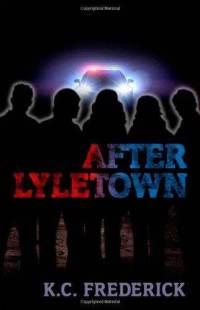
The ghosts of Sixties radicalism return to haunt the life of Boston real estate lawyer Alan Ripley in KC Frederick’s new novel. Continue reading After Lyletown, by K.C. Frederick

The world is a scary place. Roz Chast latest book, What I Hate: from A to Z, is her alphabetic exploration of her panaphobic panoply of paranoia-inducing pictures. Her fears run the gamut of the familiar (heights, getting lost, and nightmares) to the unusual (spontaneous human combustion, balloons, and Jello 1-2-3). Each entry has a short introduction opposite the illustrated page. There are single panels and other pages cluttered with details. In one introduction, she explains her fear of rabies originating in children’s literature. She writes, “On an ideal planet, children’s books wouldn’t be censored for references to sex, but … Continue reading What I Hate: from A to Z, by Roz Chast

New York Review Books publishes a forgotten classic of genre mashups and social satire. Continue reading The Letter Killers Club, by Sigizmund Krzhizhanovksy

Roberto Bolaño’s novel The Savage Detectives chronicled a literary movement named “the Visceral Realists.” Crow: from the Life and Songs of the Crow by Ted Hughes offers the reader a kind of visceral realism. The poetry cycle recounts the life and times of Crow, a folkloric character, comedian and trickster. The collection ranges across various types of poems: fairy tales, lullabies, legends, comedic shtick, and parody. Like the crows one sees everyday, Crow scrabbles in waste, carrion, and garbage. He is a scavenger, appropriating things, a collector of junk. The poem titles bear this out, “Oedipus Crow,” “Crow Tyrannosaurus,” and … Continue reading Crow: From the Life and Songs of the Crow, by Ted Hughes
 The Driftless Area Review